What is Freediving?
At its core, freediving is simple: you take a deep breath, relax your mind, and let yourself glide beneath the surface. But behind that simplicity lies a surprisingly rich world of technique, physiology, and personal discovery.
If you’ve ever wondered what freediving is, how it works, or whether it’s right for you, this guide will walk you through everything you need to know.
Freediving vs. Scuba Diving: What’s the Difference?
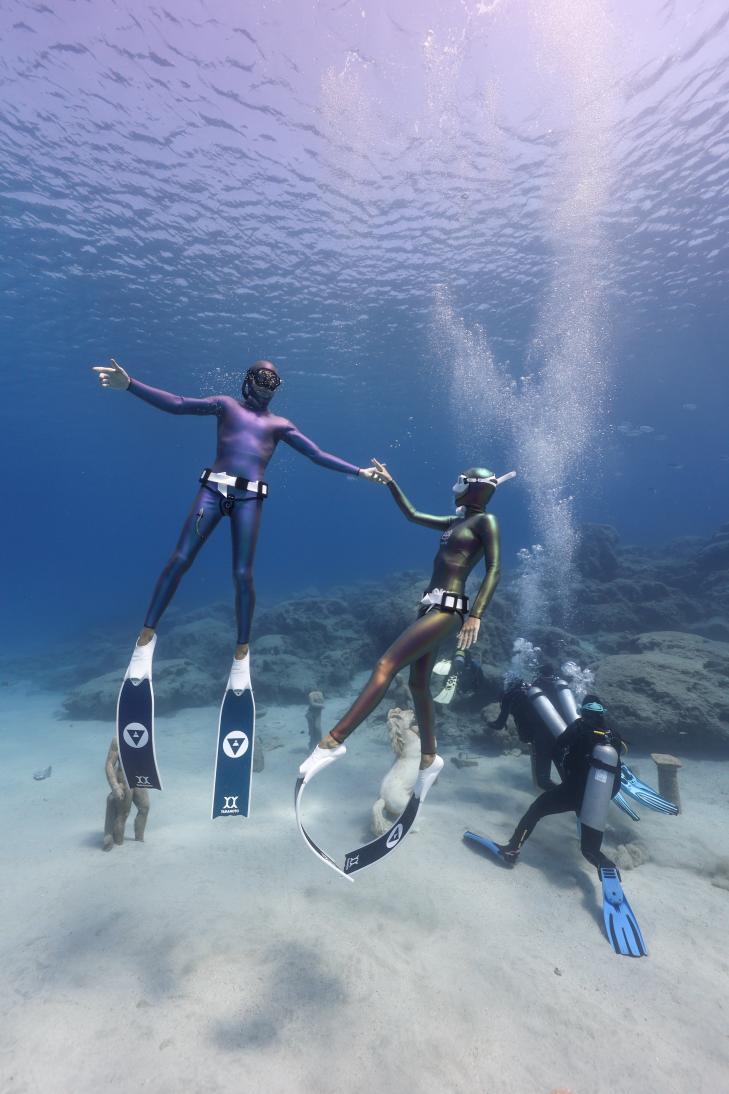
Freediving involves diving on a single breath without any breathing apparatus. It relies on breath‑holding techniques and efficient movement, making it a simpler, quieter, and more minimalist experience. It feels light, calm, and meditative — perfect for those who enjoy minimal gear and a close connection to the sea.
Scuba diving uses breathing equipment (a tank and regulator) that allows you to breathe underwater for extended periods. With proper training and equipment, divers can stay underwater much longer and explore deeper environments. Scuba is ideal for slow exploration and spending extended time observing marine life.
Both freediving and scuba diving are great ways to explore the underwater world, each offering something different. It all comes down to your interests, your goals, and what kind of experience you want in the water.
The Goal of Freediving
One of the biggest misconceptions about freediving is that it’s only about going deep. In reality, freediving is much more than that. It’s about improving your body awareness, reconnecting with the ocean, and gently exploring your limits — both physically and mentally.
People learn freediving for many different reasons:
Ocean exploration
Mental health
Underwater photography
Fitness
Spearfishing
Pool training for distance or technique
Competitive depth, distance, or time disciplines
Or simply finding calm and presence in the water
Just like training for a marathon, you need to practice freediving before you can safely and comfortably apply it to activities like spearfishing.
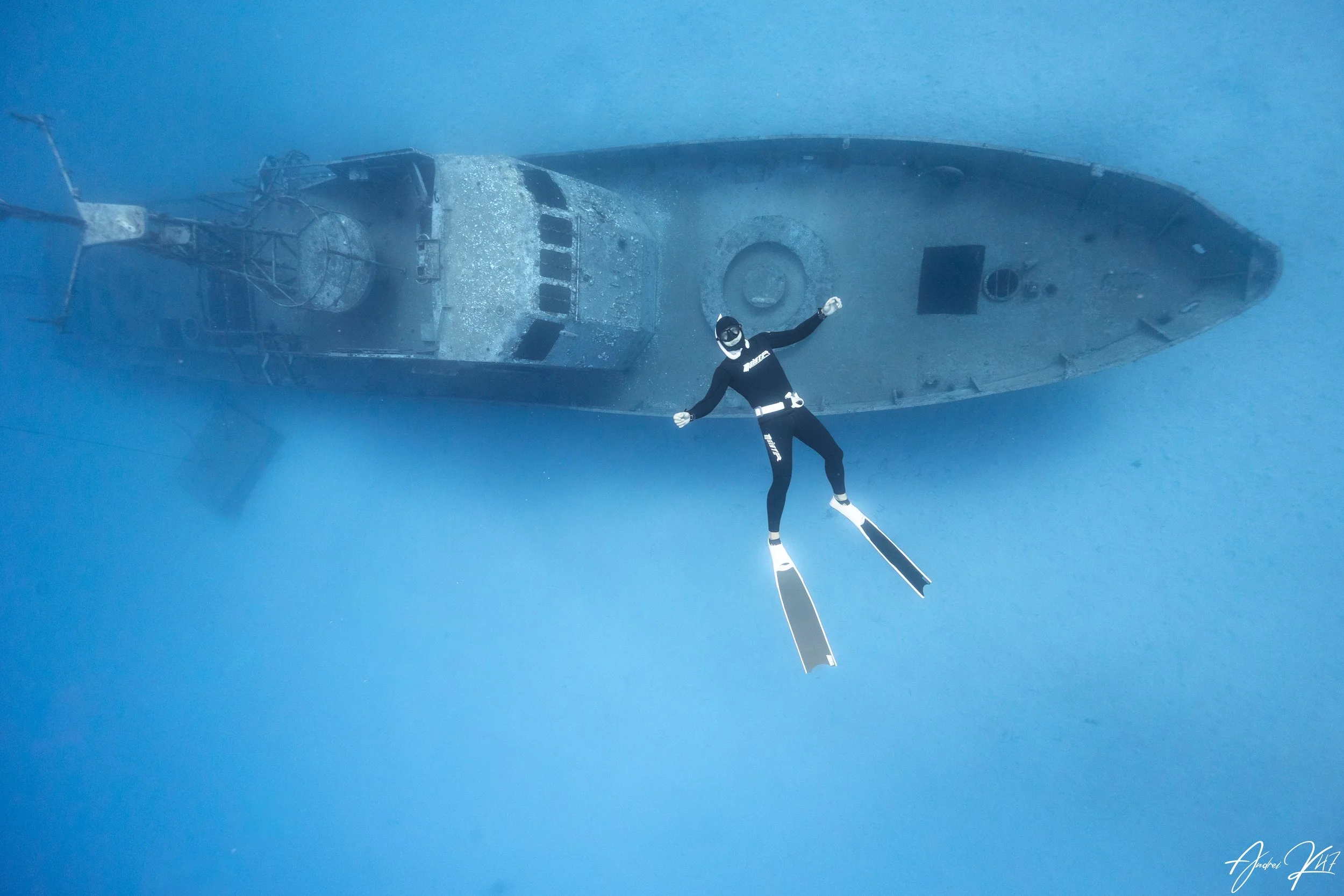
A freediver exploring the wreck of the Kyrenia in Protaras, Cyprus.
The Core Principles of Freediving
Freediving courses and training focus on improving three main pillars:
Relaxation — Calm breathing and a quiet mind are the foundation of every dive.
Technique — Streamlined posture, efficient finning, and proper equalization help you move smoothly without wasting oxygen.
Safety — Freediving is extremely safe when practiced with a trained buddy, instructor, or coach, and correct procedures. If you want to progress, you need to train each of these pillars consistently.
If you want to progress, you need to train each of these pillars consistently.
Main Disciplines of Freediving
Freediving includes several disciplines, each focusing on a different way of diving on one breath. They help divers develop skills in relaxation, technique, strength, and efficiency.
Static Apnea (STA) — Breath‑holding while staying still at the surface.
Dynamic Apnea (DYN) — Swimming horizontally in a pool for distance, with fins or without.
Constant Weight (CWT) — Diving down and up a line in open water using fins, keeping the same weight throughout the dive.
Constant Weight No Fins (CNF) — Diving down and up the line without fins, using only arm strokes and leg kicks, keeping the same weight throughout the dive.
Free Immersion (FIM) — Pulling yourself down and up the line using your arms instead of fins or kicks, keeping the same weight throughout the dive.
Variable Weight (VWT) — Descending with a weighted sled or weight system and ascending under your own power by finning, pulling the rope, or both.
No‑Limit (NLT) — Descending with a weighted sled and ascending with a lift device such as a lift bag.
So when someone asks, “How long can you hold your breath?” the answer is always: it depends on the discipline. The more movement you have, the more oxygen your body uses — which means shorter breath‑hold times.
Is Freediving Safe?
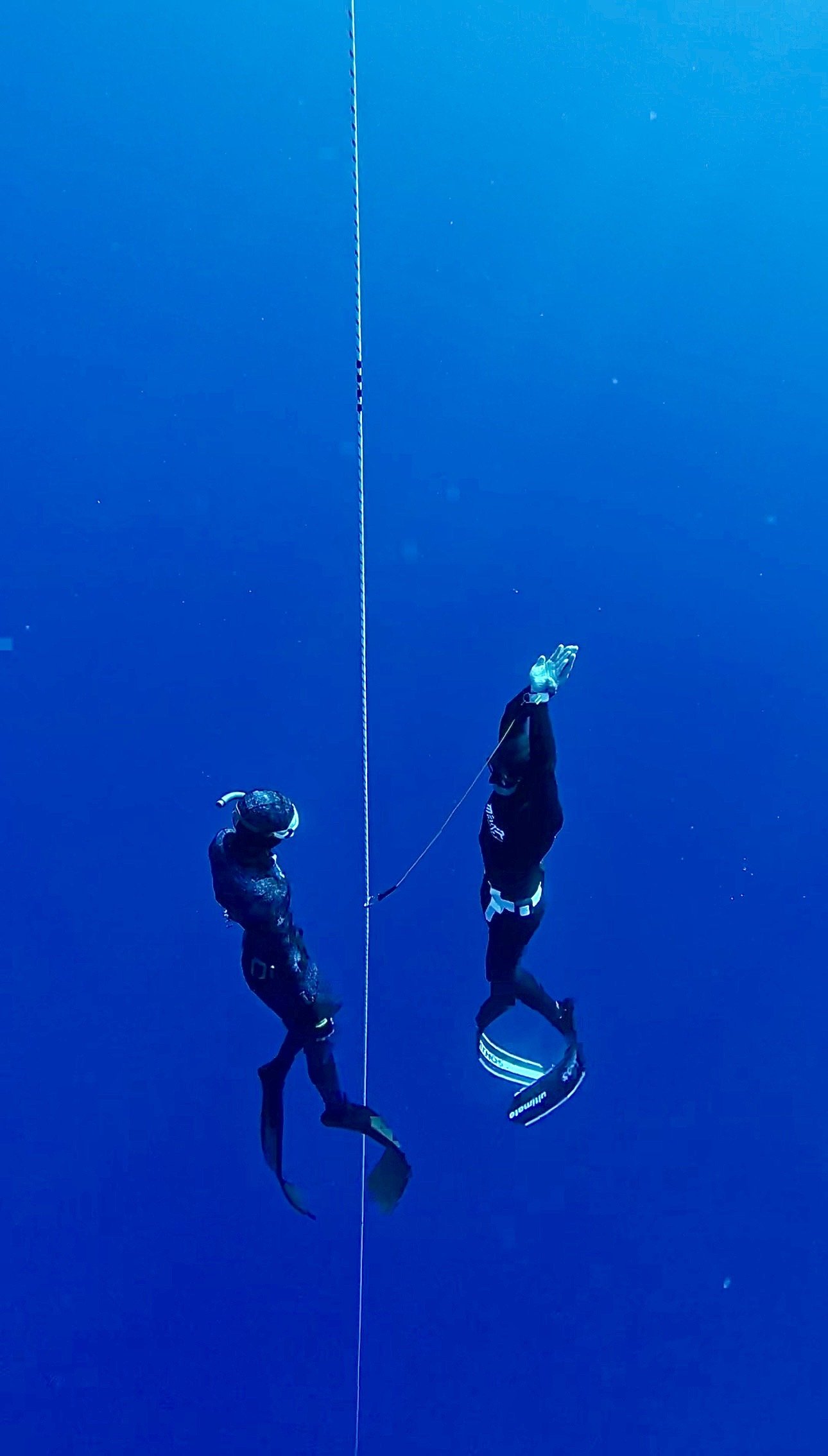
When done correctly, freediving is one of the safest sports you can practice. It’s not something you do alone, and proper training is essential. You follow clear safety protocols, buddy procedures, rescue skills, and you learn to understand your personal limits
How to Start Freediving
You might now ask yourself: how do I begin my freediving journey?
When you first decide to learn freediving, one of the biggest questions you’ll face is: Which certification agency should I choose? While all reputable agencies prioritize safety and proper education, the learning experience can vary significantly.
Among today’s leading agencies, Molchanovs stands out for its modern approach to freediving education. Founded by world champion freediver Natalia Molchanova’s family legacy, Molchanovs has rapidly become one of the most respected and innovative freediving education systems in the world.
Rather than focusing solely on certification requirements, the system is designed around developing well‑rounded freedivers who understand not only what to do, but why they do it.
The next step is joining a Try Freediving experience. Here, you learn the basics and get a feeling for the whole concept. If you enjoy it, you can continue with your first course.
The Molchanovs Wave 1 course is designed to improve your knowledge and technique while introducing you to the main freediving disciplines. It takes three days. Afterwards, you are eligible to progress to Molchanovs Wave 2. The training and coaching needed to meet the requirements of Wave 2 can be provided by your instructor you trust.
The Hydrosphere approach
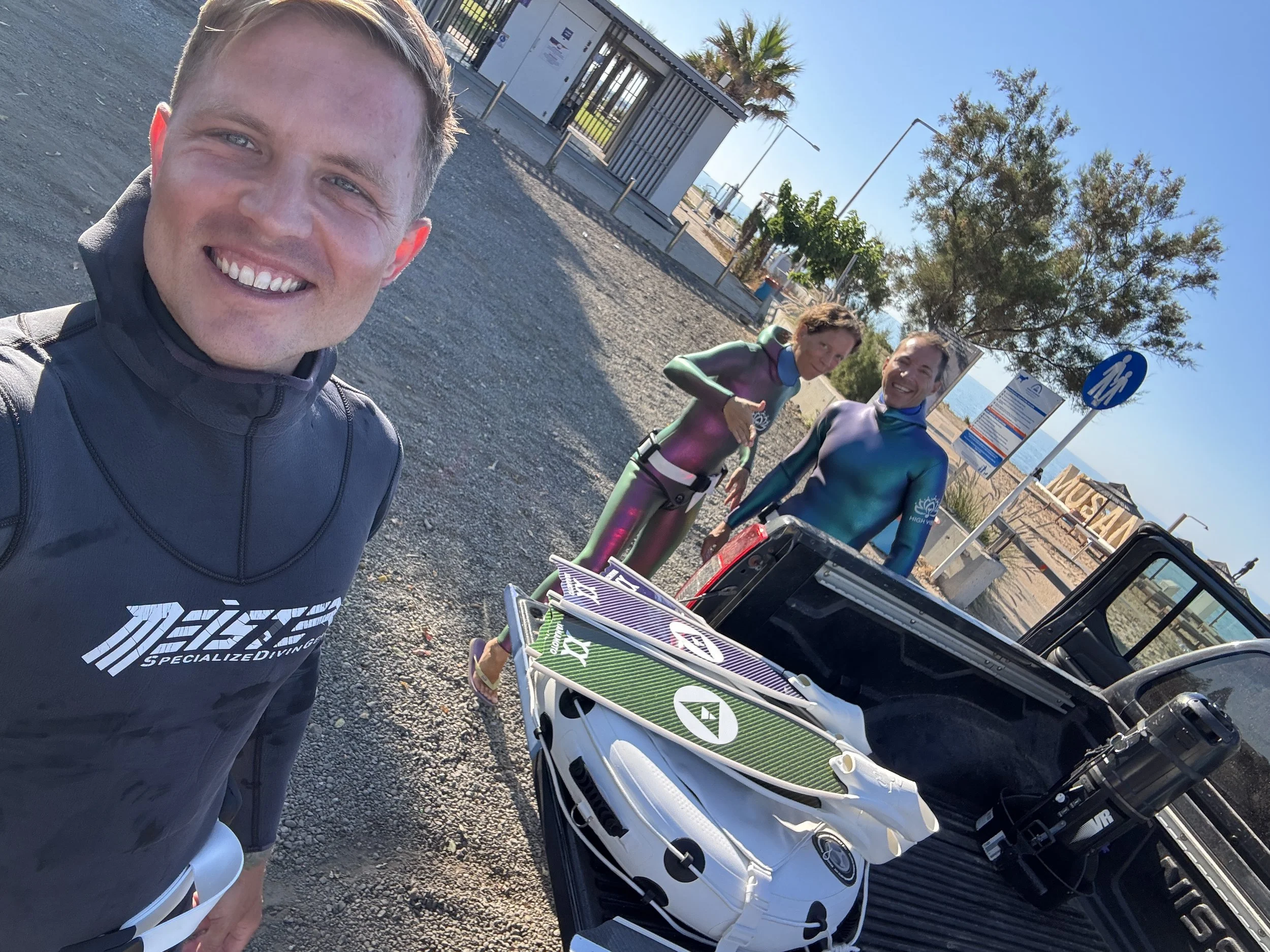
At Hydrosphere Dive Club, we introduce you to freediving in a safe, professional, and supportive environment. Andrei, your instructor, guides you step by step, focusing on proper technique, safety skills, and enjoyment in the water.
We believe progress happens best in a personal environment where you can train at your own pace. That means no big groups, no pressure, and no rush — just you and the sea.
Meet Your Instructor
Freediving is a personal sport, so let’s talk about the person behind your training: Andrei.
Andrei’s passion for the underwater world began in childhood, when he first fell in love with snorkeling. Many years later, he left his home country, Austria, and moved to Cyprus, where he discovered freediving in 2020. From the very first breath‑hold, he knew this was what he wanted to dedicate his life to.
Since then, he has spent countless hours exploring the waters around Cyprus and refining his skills in freediving. Eventually, Andrei also ventured into scuba diving, continuing to train with the same determination and curiosity. His commitment paid off when he earned his Scuba Instructor certificate in Cyprus, followed by his Freediving Instructor qualification in Malta. With both worlds now fully open to him, he took the step that had long been his dream: founding Hydrosphere Dive Club and beginning his professional journey in the diving industry.
Andrei’s passion is immediately recognizable. With great joy — and always with the highest standards of safety and professionalism — he supports and motivates his students, helping them reach their full potential underwater.
Get in touch with us and let Andrei’s passion for the ocean inspire you.